Editorial Annotation
Definition of electro-magnetic, acoustic, mechanical or other device
Introduction
Section 183 defines electro-magnetic, acoustic, mechanical or other device as any instrument used to intercept private communication, excluding hearing aids.
Statutory Text
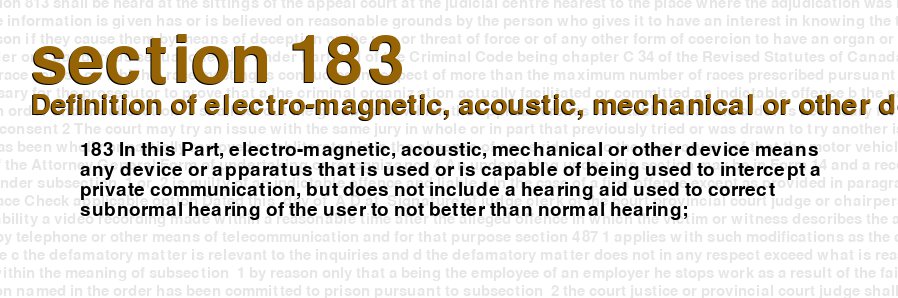
183 In this Part, "electro-magnetic, acoustic, mechanical or other device" means any device or apparatus that is used or is capable of being used to intercept a private communication, but does not include a hearing aid used to correct subnormal hearing of the user to not better than normal hearing;
Explanation
Section 183 of the Criminal Code of Canada defines the term "electro-magnetic, acoustic, mechanical or other device" in the context of Part VI, which deals with the interception of private communications. The section clarifies that the definition refers to any device or apparatus that is used or capable of being used to intercept a private communication. This includes any technological device or tool that is designed to capture or record any form of communication that is intended to be private, such as phone calls, text messages, or emails.
However, the definition of "electro-magnetic, acoustic, mechanical or other device" in this section does not include hearing aids that are used to correct subnormal hearing of the user to not better than normal hearing. This means that a hearing aid user cannot be prosecuted under Part VI of the Criminal Code for intercepting private communication, as the use of the device is intended to help the user hear better and not for malicious purposes.
This section is important in the Criminal Code of Canada because it provides clarity on what constitutes an intercepting device in the context of Part VI. The provision helps to ensure that individuals are aware of the types of devices that are prohibited by law from intercepting private communication. It also provides an exception to the rule for individuals who require hearing assistance, ensuring that they are not unfairly targeted or penalized under the provisions of Part VI. Overall, section 183 of the Criminal Code of Canada plays an important role in protecting the privacy of Canadians while also recognizing legitimate uses of technological devices.
Commentary
Section 183 of the Criminal Code of Canada is primarily aimed at regulating the use and interception of private communications through various electronic devices. The section defines the term electro-magnetic, acoustic, mechanical or other device" as any apparatus that is capable of intercepting private communication. However, the section explicitly exempts hearing aids from this definition, provided they are used to correct subnormal hearing and to achieve normal hearing levels.
The primary purpose of Section 183 is to protect the privacy of citizens and prevent intrusions into their private communication. The section establishes a legal framework for investigating and prosecuting cases of illegal interception of private communication. The criminalization of the interception of private communication through electronic devices sends a message that the privacy of individuals is highly valued and should be protected by law.
However, the restriction on using electronic devices to intercept private communication is not absolute. There are situations where the law allows interception of private communication. For instance, the Criminal Code allows law enforcement agencies to intercept private communication under certain circumstances, such as when investigating certain criminal activities. The authorities need to obtain a warrant before they can intercept any private communication. This provision ensures that law enforcement agencies do not abuse their powers and that citizens' privacy rights are not unduly disregarded.
One of the challenges in enforcing Section 183 is the rapid advancement of technology. The law relies on the definition of electronic devices as per the Criminal Code. However, as technology advances, new devices and methods of communication are developed, making it difficult to determine which devices fall under the definition provided in the code. For instance, the emergence of new technologies such as social media and messaging applications raises questions on whether they fall under the definition of electronic devices as stated in the Criminal Code.
In conclusion, Section 183 of the Criminal Code of Canada is a crucial provision that protects the privacy of Canadians by regulating the use of electronic devices to intercept private communication. The section sends a clear message that Canadian laws prioritize the protection of individual privacy and that intrusions into private communication not authorized by law will not be tolerated. While the section has loopholes and challenges, it remains an essential legal framework for safeguarding individuals' privacy rights. Therefore, it is important that authorities and citizens understand and adhere to the provisions of this section to uphold the integrity of Canadian laws.
Strategy
Section 183 of the Criminal Code of Canada only permits the interception of private communication through the use of a "hearing aid" designed to improve the hearing of the user. Any other device or apparatus used to intercept private communication is considered unlawful and can result in criminal prosecution. Understanding this section of the Criminal Code is crucial, especially for anyone involved in surveillance or intelligence-gathering activities. Strategic considerations when dealing with this section of the Criminal Code of Canada include:
1. Compliance with Legal Frameworks: Surveillance or intelligence-gathering activities that involve the interception of private communication should not violate human rights and should comply with legal frameworks governing the practice.
2. Understanding the Definition of "Electronic Device": Any device or apparatus capable of intercepting private communication, other than a hearing aid, is considered unlawful under section 183. Therefore, surveillance activities that involve the use of electronic devices should be carefully considered and monitored.
3. Interception of Private Communication: Section 183 specifically addresses the interception of private communication. Therefore, it is important to understand what constitutes "private communication" under the law. For example, a conversation between two individuals in a public place may not be considered a private communication under the law.
4. Obtaining a Warrant: To intercept private communication legally, a warrant may be required under the Criminal Code. The warrant specifies the scope and duration of the surveillance activity, ensuring that the government's surveillance powers are not abused.
5. Proper Documentation: Where a warrant is not required, it is still essential to maintain proper documentation of the surveillance activity. This includes recording the purpose of the surveillance, the methods used, and the individuals involved.
6. The Impact of Technology: Advances in technology continue to create new challenges when it comes to surveillance and intelligence-gathering. It is important to stay up-to-date with technological advancements and the legal implications associated with their use.
7. Use of Third-Party Agencies: Carrying out surveillance activities through third-party agencies can create additional legal and ethical considerations. Organizations involved in such activities should have a clear understanding of the legal boundaries, and the risks associated with engaging third-party agencies.
Some strategies that could be employed in dealing with section 183 of the Criminal Code include:
1. Training and Awareness: Organizations involved in surveillance or intelligence-gathering should have comprehensive training and awareness programs on the legal frameworks associated with such activities. This ensures that all involved parties understand the legal, ethical, and technical considerations involved.
2. Risk Assessment: Activities involving the interception of private communication have inherent risks that should be evaluated and minimized. A risk assessment helps to identify potential risks associated with the activity, providing insights into the likelihood and severity of each risk.
3. Regular Review: Reviewing the surveillance activity regularly helps to ensure compliance with legal frameworks and to identify any potential gaps that require attention.
4. Use of Legal Counsel: Legal counsel can help organizations navigate the legal frameworks surrounding surveillance activities, ensuring compliance with all applicable laws and regulations.
5. Collaboration with Relevant Government Agencies: It is essential for organizations involved in surveillance activities to collaborate with relevant government agencies to ensure their activities comply with all applicable laws and regulations.
In conclusion, section 183 of the Criminal Code of Canada clearly stipulates that the interception of private communication through the use of electronic devices is illegal unless explicitly authorized by a warrant. Therefore, organizations and individuals involved in such activities should take into account the legal, ethical, and technical considerations associated with the practice. By employing the strategies outlined above, these parties can ensure compliance with the law and minimize the risks associated with such activities.